Sweat "down there" is the underwear problem almost no one says out loud. You feel it on a hot day, on a long drive, an hour into a walk, or in a meeting that runs too long — that damp, clammy, sticking feeling that no amount of shifting in your chair actually fixes. It's extremely common, and the single biggest lever you have over it is the one thing in contact with the problem all day: your underwear.
The catch is that "breathable" and "moisture-wicking" are printed on nearly every pack, and they tell you almost nothing. Some underwear genuinely keeps you cool and dry; plenty of it traps heat and holds sweat against your skin for hours. Here's an honest guide to why the groin sweats more than the rest of you, why a damp pair is more than just annoying, and how to actually choose underwear that keeps you dry.
Why you sweat so much down there
It isn't in your head — the groin is genuinely one of the sweatiest regions on the body, for three reasons that stack on top of each other.
More sweat glands, and a different type. The groin is dense with apocrine glands — the ones concentrated in warm, covered areas — and they produce a thicker sweat that bacteria feed on, which is why groin sweat tends to smell more than, say, arm sweat. We go deeper on the biology in our guide to why your balls sweat so much, but the short version is that you're working with a lot of glands in a small, enclosed space.
Heat has nowhere to escape. The area is wrapped in at least two layers — underwear and trousers — often with your thighs pressed on either side. Warmth and humidity build up in that pocket and just sit there, especially when you're seated for hours.
Skin pressed against skin. When everything is squashed flat against your inner thighs, you get skin-on-skin contact that traps moisture and raises the local temperature — a feedback loop where heat makes sweat and trapped sweat holds heat.
Why a sweaty pair is more than just uncomfortable
Damp underwear isn't only a comfort issue — it quietly causes the things men complain about most.
Chafe. Sweat plus friction is the exact recipe for chafing; wet skin rubbing against wet fabric, or against itself, is far more likely to become raw than dry skin. If chafe is your main issue, we cover it in detail in how to stop chafing — for good.
Odour. Warm, damp, low-airflow conditions are exactly what odour-causing bacteria want. Fabric that stays wet keeps that environment going all day.
Irritation and jock itch. Persistent moisture is a well-known trigger for fungal irritation like jock itch. Staying dry is genuinely the first line of defence.
The endless readjusting. A damp, clinging pair is the one you're constantly peeling and repositioning — the background fidget that never fully goes away.
What actually keeps you dry — the things to look for
Every pack claims "breathable." Here's what to look for underneath the word.
1. Real airflow, not just a "breathable" label. Look for genuine ventilation — mesh or open-knit panels placed where heat actually builds, not a single "breathable fabric" claim printed over a solid front panel. Airflow is what lets built-up humidity escape instead of sitting against your skin.
2. Fabric that moves moisture instead of holding it. This is the big one. Some fabrics pull sweat away from the skin and let it evaporate; others soak it up and stay wet. The best pairs actively wick — moving moisture to the outer surface where it can dry — rather than acting like a sponge.
3. A pouch that separates. A contoured, separating pouch holds everything forward and apart from your thighs instead of squashing it flat. Less skin-on-skin contact means less trapped heat and sweat — so a good pouch isn't just about support, it's one of the most underrated tools for staying dry.
4. Anti-chafe construction. Because sweat and chafe travel together, flat or flatlock seams and smooth inner-thigh panels matter more once things get damp, not less. A hard seam that's fine when dry becomes a hotspot when wet.
5. A fit that doesn't bunch or ride up. Fabric that bunches, or legs that ride up, create folds where heat and moisture collect. A pair with stay-put legs and a clean fit keeps the surface flat and ventilated.
6. Skip pure cotton for sweat. The single most common mistake — more on why below.
The fabrics, ranked for sweat
Fabric is where most of the dry-versus-damp difference is won or lost. Roughly, from worst to best for sweat:
- Pure cotton — the worst choice for sweat. Soft and breathable when it's dry, but cotton absorbs moisture and holds onto it, so once you sweat it stays wet against your skin for hours. Fine for a cool day at a desk; a poor pick for heat or activity.
- Bamboo — better, but comfort-led. Soft and reasonably breathable, but it can hold moisture more than performance fabrics and feel less structured. Okay for everyday, less ideal when you're really sweating.
- Modal — a strong everyday pick. Modal (often TENCEL Modal) is breathable, soft, and moves moisture noticeably better than cotton, which makes it a comfortable default for warm days without going full sportswear.
- Performance synthetics and mesh — best for heat and sport. Nylon-spandex, microfibre and mesh wick moisture and dry quickly, which is exactly what you want when things get hot. The trade-off is they can feel less soft on their own.
- The best pairs blend them. A soft modal-based body for all-day comfort, with synthetic support panels and mesh airflow zones placed where heat builds — that combination gives you softness and genuine sweat management, instead of forcing you to choose between the two.
A few habits that help too
Underwear does most of the work, but a few small things stack on top: change out of sweaty underwear promptly after the gym rather than sitting in it, reach for breathable trousers on hot days, and dry off properly after a shower before you dress. None of these replace the right pair — but they make a good pair work even better.
The verdict
Staying dry down there isn't about finding one magic fabric — it's about a pair that gets several unglamorous things right at once: real airflow where heat builds, a fabric that moves moisture instead of soaking it up, a pouch that keeps skin apart, seams that won't chafe when wet, and a fit that stays put. Most underwear nails one or two of those and ignores the rest. If you want the full checklist for choosing a genuinely good pair, our guide to the best men's pouch underwear in Australia breaks it down.
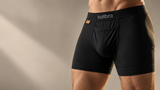
That gap is exactly what Ballbra was built around: mesh airflow zones placed where heat actually builds, a soft Modal-stretch body with nylon-spandex support that moves moisture instead of holding it, a separating support pouch that keeps everything forward and apart from your thighs, anti-chafe panels, and a stay-put leg — the whole set working together to keep you cool and dry through the day, backed by a 30-day comfort guarantee.
Get those right and the damp, clammy, constantly-readjusting feeling simply stops being part of your day — which is the entire point.